
Disconnected Systems
Business software, production equipment, and automation technologies often operate independently, making it difficult for information to move where it's needed.
INTEGRATED AUTOMATION
Automation becomes more powerful when systems work together.
RoboRite connects digital intelligence, industrial equipment, robotics, and existing business systems to help eliminate manual handoffs, improve visibility, and automate processes from beginning to end.
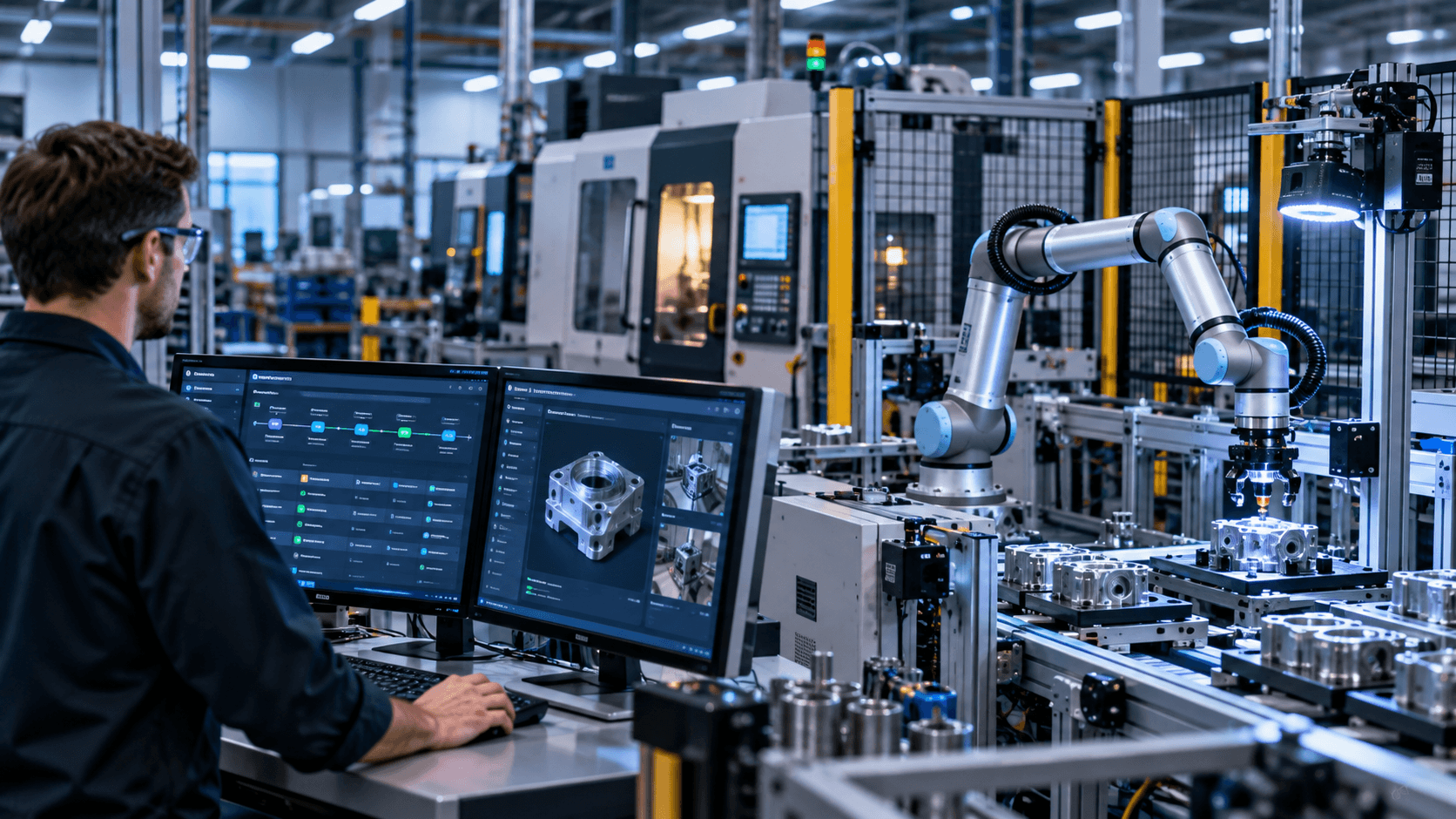
THE BIGGER PICTURE
Automating a single task can deliver meaningful improvements. But significant opportunities often exist in the steps connecting one task to the next.
Orders still need to reach production. Machines still need instructions. Inspection results still need to be recorded. People still spend time moving information between disconnected systems.
Integrated automation addresses these gaps by connecting individual processes into more coordinated workflows.
Business software, production equipment, and automation technologies often operate independently, making it difficult for information to move where it's needed.
Employees spend valuable time transferring data, entering information, updating statuses, and coordinating activities between systems.
When operational information remains scattered, teams can struggle to see process status, identify bottlenecks, and respond quickly.
CONNECTED WORKFLOWS
An order, machine signal, inspection result, or production event can initiate a series of coordinated actions.
By connecting the right systems and equipment, RoboRite helps turn information into action—and captures the results to keep the process moving.
Information enters the workflow from an ERP system, MES platform, operator, sensor, or another source.
Software, business rules, or AI determine the appropriate next action.
Connected equipment, controls, robotics, or software perform the required task.
Results, inspection data, and operational status are captured and communicated to the appropriate systems or people.
An illustrative workflow, not a required architecture. The right solution may use software, rules, AI, equipment, or robotics in the combination the work needs.
A new order enters the ERP system. Relevant information is transferred to production systems, equipment receives the necessary instructions, and completed work or inspection results are recorded and communicated back to the appropriate systems.
This reduces repetitive data entry and helps connect planning, production, and reporting.
PRACTICAL APPLICATIONS
The right integration can eliminate repetitive work, reduce delays, and improve coordination across operations.
Every environment is different. These examples illustrate how digital systems and physical automation can work together to solve real operational challenges.
Connect order information, production systems, and equipment to reduce manual data entry and improve the movement of work from planning to execution.
Combine machine vision, robotic motion, and industrial controls to identify, locate, inspect, or manipulate parts as part of an automated process.
Use information from connected systems and appropriately validated intelligent decision-making to initiate actions, route exceptions, or coordinate downstream automation.
Integrate machines, PLCs, sensors, and production systems so equipment can exchange information and respond to relevant operating conditions.
Connect automated inspection with production controls and reporting systems to capture results, identify exceptions, and support appropriate corrective actions.
Collect and connect operational information across equipment and software to improve reporting, monitoring, and decision-making.
PRACTICAL INTEGRATION
Improving automation doesn't always mean replacing equipment or starting over with new systems.
Many businesses already have valuable technology in place—from ERP software and production management systems to PLCs, sensors, machines, and robotics.
The opportunity often lies in connecting these existing capabilities more effectively.
RoboRite starts by understanding your current environment, identifying where information and work become disconnected, and determining which improvements offer the greatest practical value.
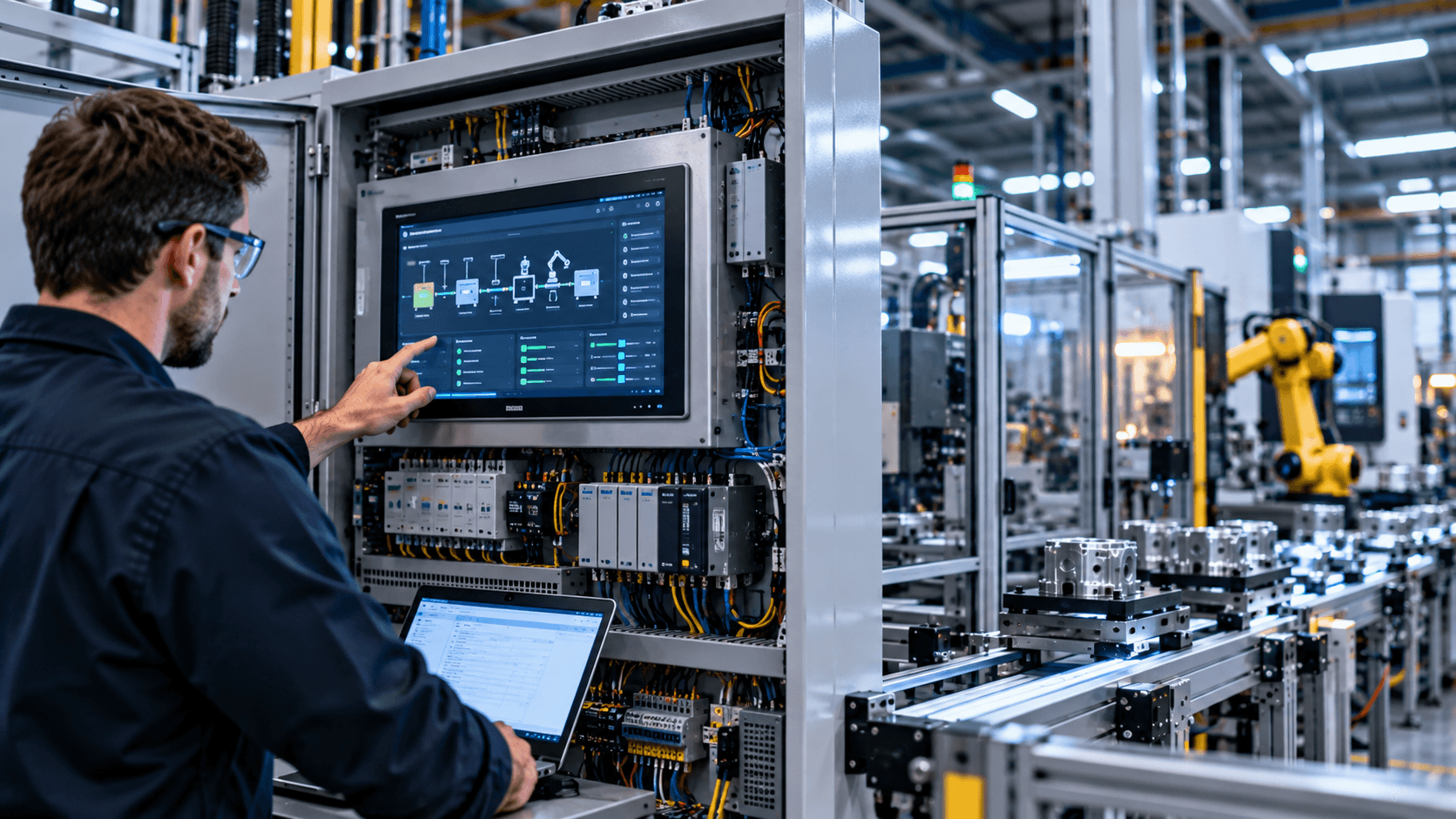
Evaluate the systems and equipment already in place before recommending additional technology.
Understand how information, materials, and decisions move through the operation.
Prioritize connections and automation improvements that address real bottlenecks, reduce repetitive work, or improve reliability.
START WITH THE WORK
The best automation opportunities aren't always found within a single machine or department.
Let's look at how your processes, systems, and equipment work together—and where better connections could create measurable value.